2026 Final Resistance Report: The Anti-LGBTQ Bills We Defeated (And The One That Passed)
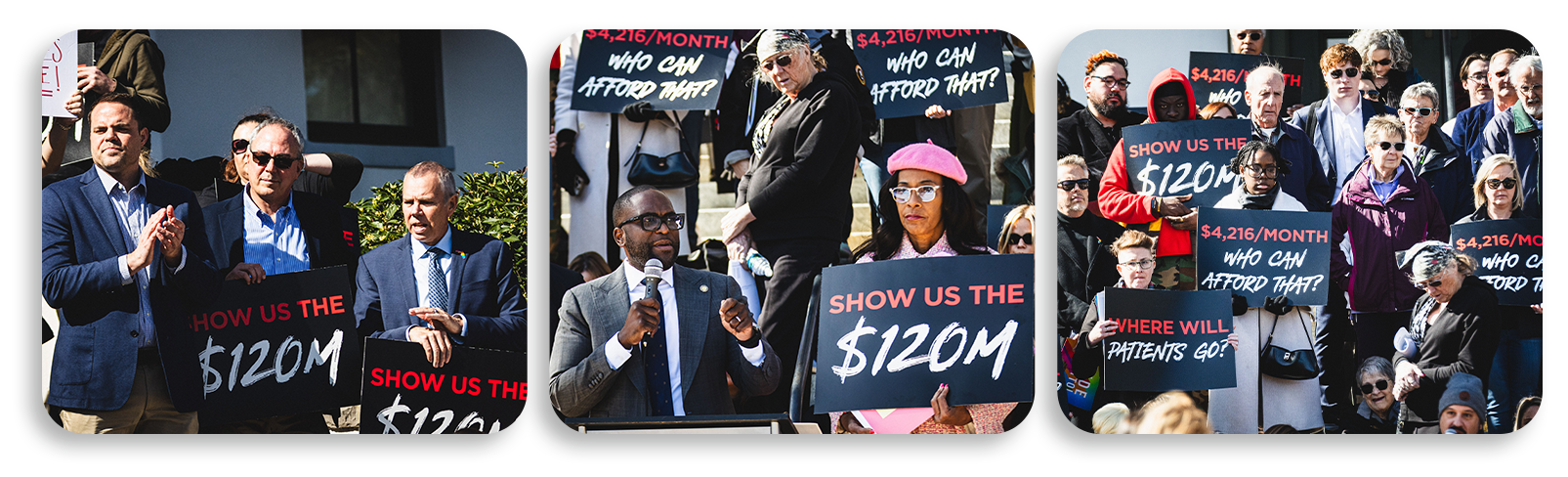
Once again, DeSantis and extremist lawmakers manufactured a slate of some of the most sweeping anti-LGBTQ bills in the country. At the same time, the Florida Department of Health launched a cruel attack on public health by cutting funding for the state’s AIDS Drug Assistance Program (ADAP), putting life-saving medication at risk for thousands of Floridians living with HIV.
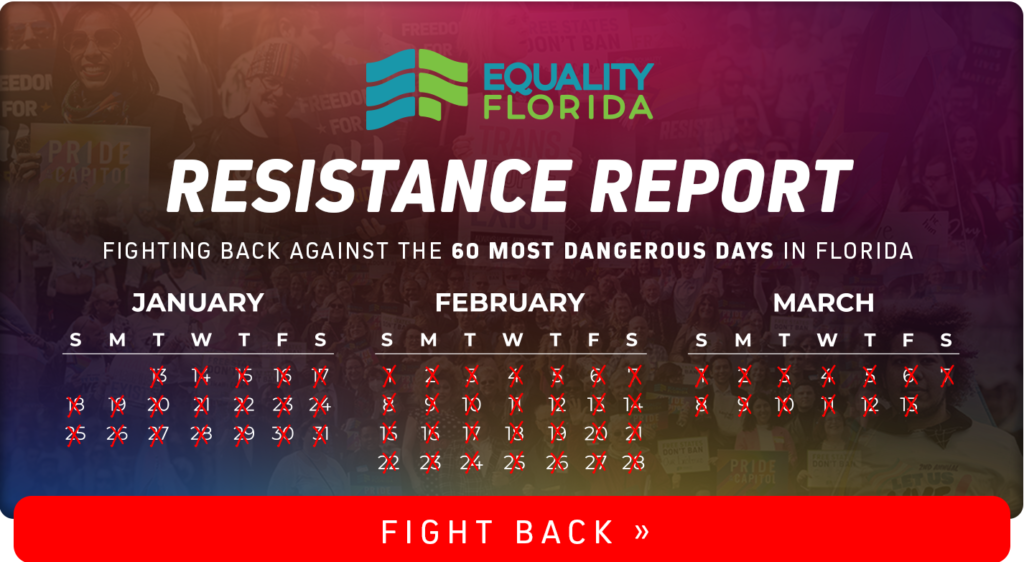
The stakes could not have been higher. But when we rang the alarm, you brought the Resistance to Tallahassee every single day of Florida’s 60-day session.
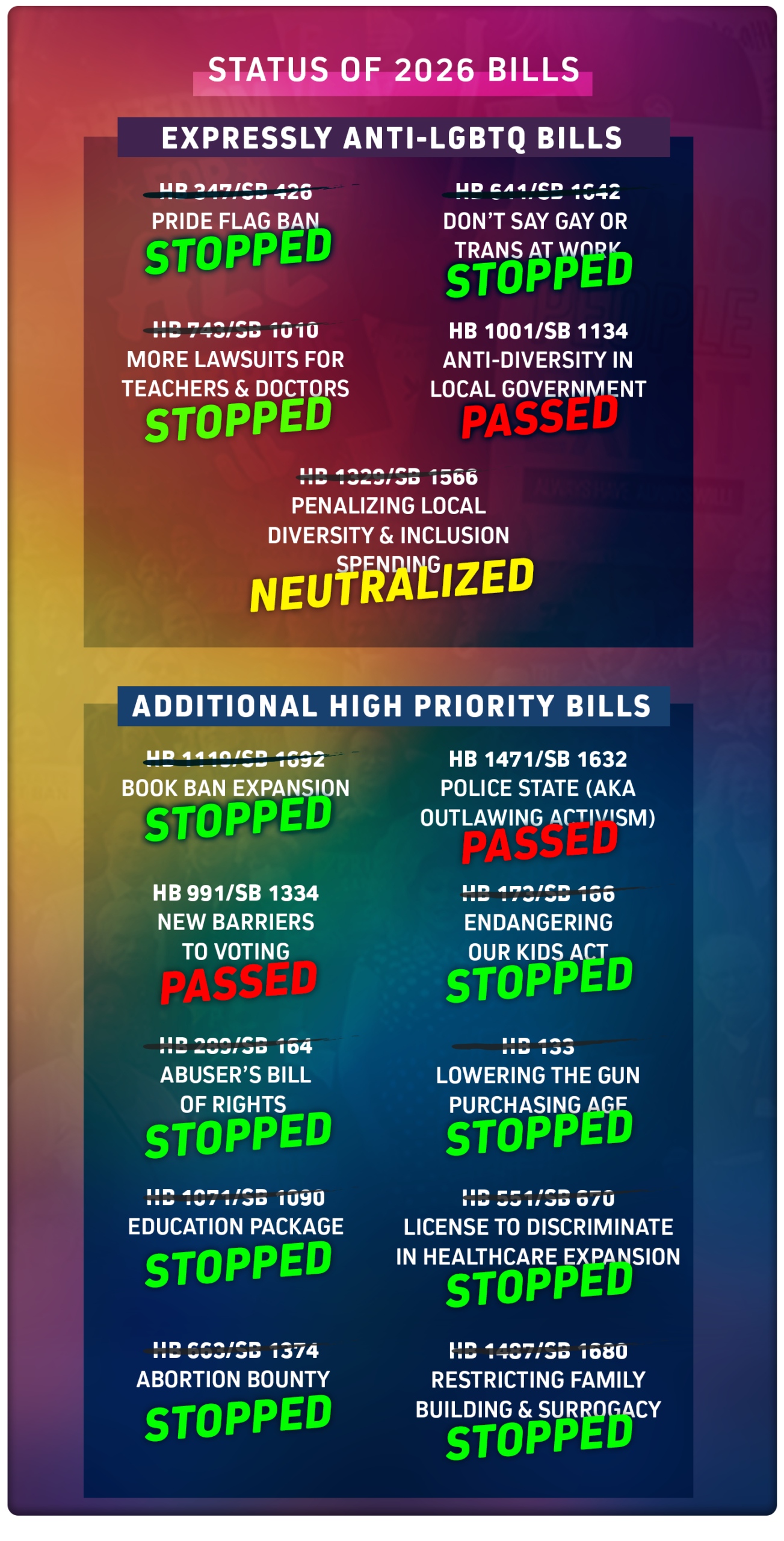
And because of that relentless pressure, we stopped or neutralized FOUR out of FIVE anti-LGBTQ bills — including proposals that would have legalized harassment of transgender workers, threatened teachers and doctors with lawsuits and criminal penalties for supporting transgender youth, and attempted to ban Pride flags from public spaces.
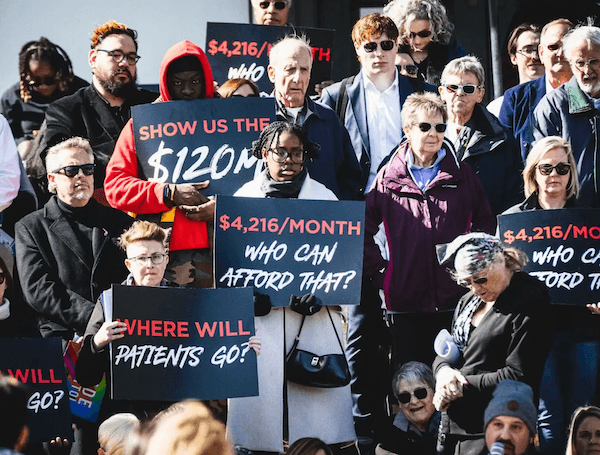
Alongside our partners and HIV advocates, we also helped secure crucial stopgap funding to protect ADAP — restoring access to HIV care for more than 10,000 people!
We won’t sugarcoat the fact that one dangerous bill did pass after a two-year fight— “Anti-Diversity in Local Government.” This sweeping legislation attempts to undermine how cities and counties celebrate and support the diverse communities they serve, particularly LGBTQ Floridians.
But it did not pass quietly or easily. The bill faced bipartisan opposition from local elected officials, lawmakers, and the public — forcing dozens of carve-outs, including protections for the Pulse Memorial in Orlando and the continued permitting of Pride festivals. (Pride is NOT banned – even as cities and counties navigate new restrictions.)
And as we’ve done before, we will fight to limit the impact of this law every step of the way — including potentially in the courts.
None of these victories happened by accident. They happened because of the people power YOU brought to this fight.
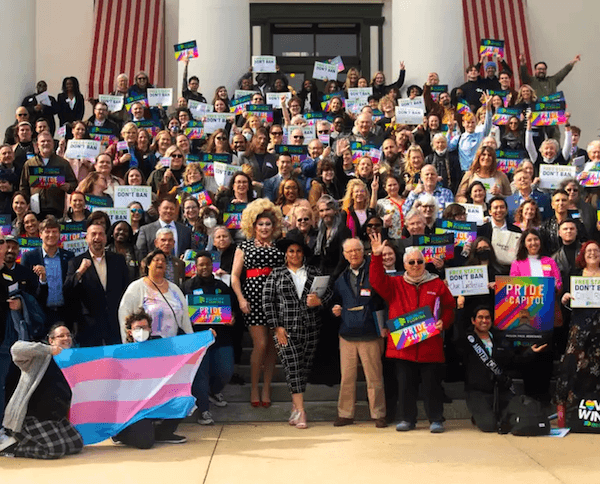
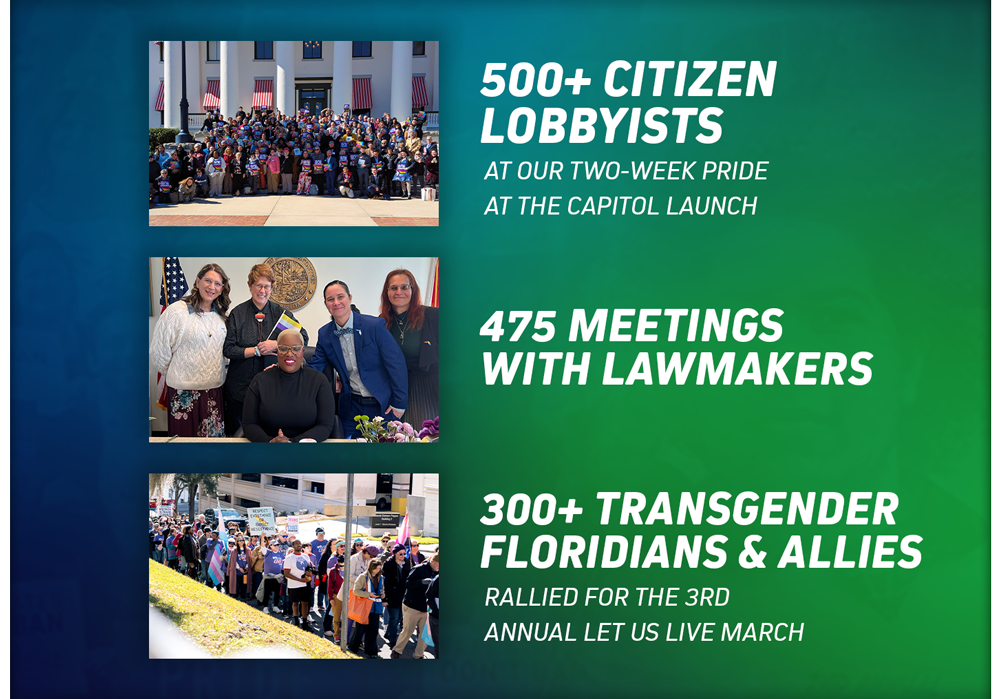
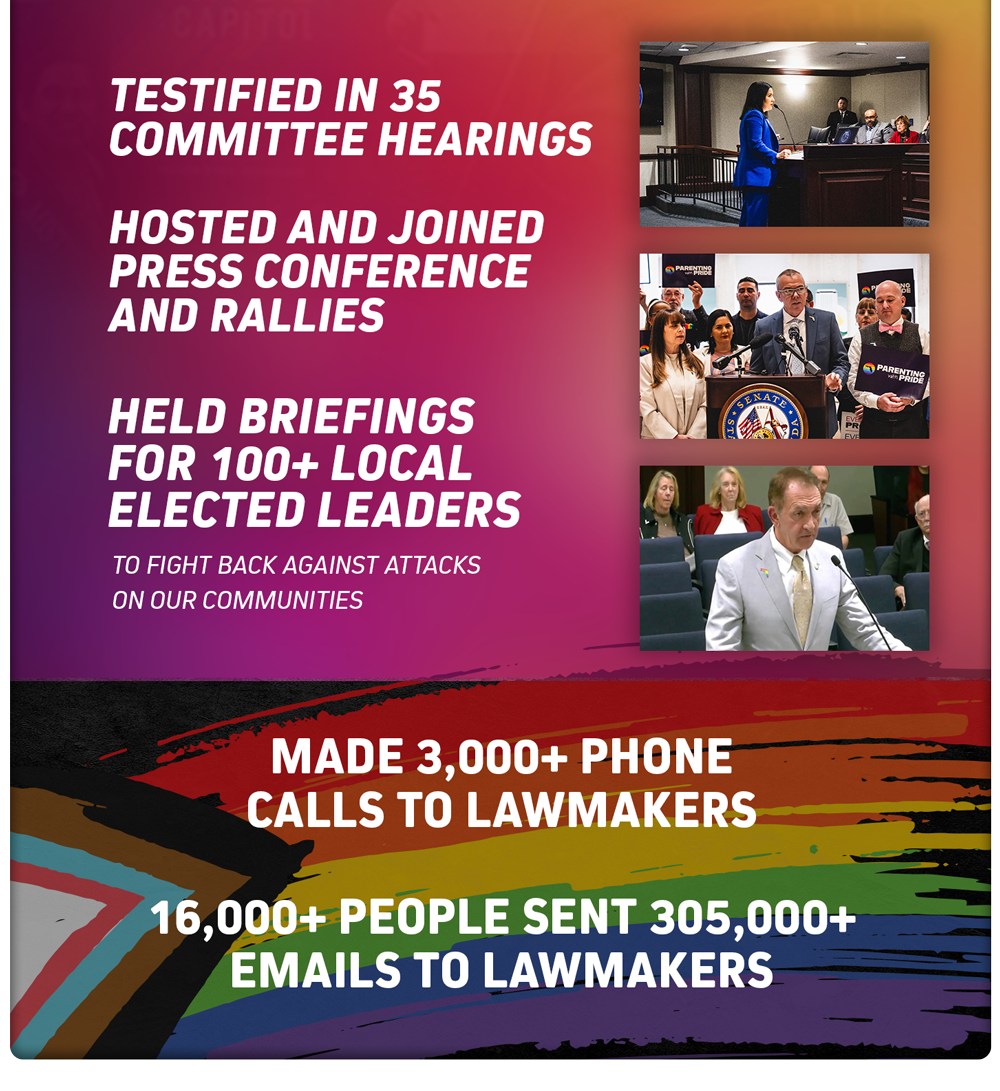
Hundreds of volunteers traveled from every corner of the state to stand on the frontlines inside the Capitol — packing committee rooms and outnumbering the opposition at every turn. Thousands more Floridians took action from home, flooding lawmakers with calls and emails demanding they reject these attacks. And when the threats escalated, so did our resistance — with hundreds more people taking buses at 3 a.m. to join us in Tallahassee.
This session tested all of us. But once again, you proved that when our community shows up together — inside the Capitol and across the state — we make a difference.
Thank you for standing on the frontlines with us. These victories were only possible because of the people power you brought to this fight. Now check out the rest of the resistance report to get a detailed overview of each bill and where they landed this session.
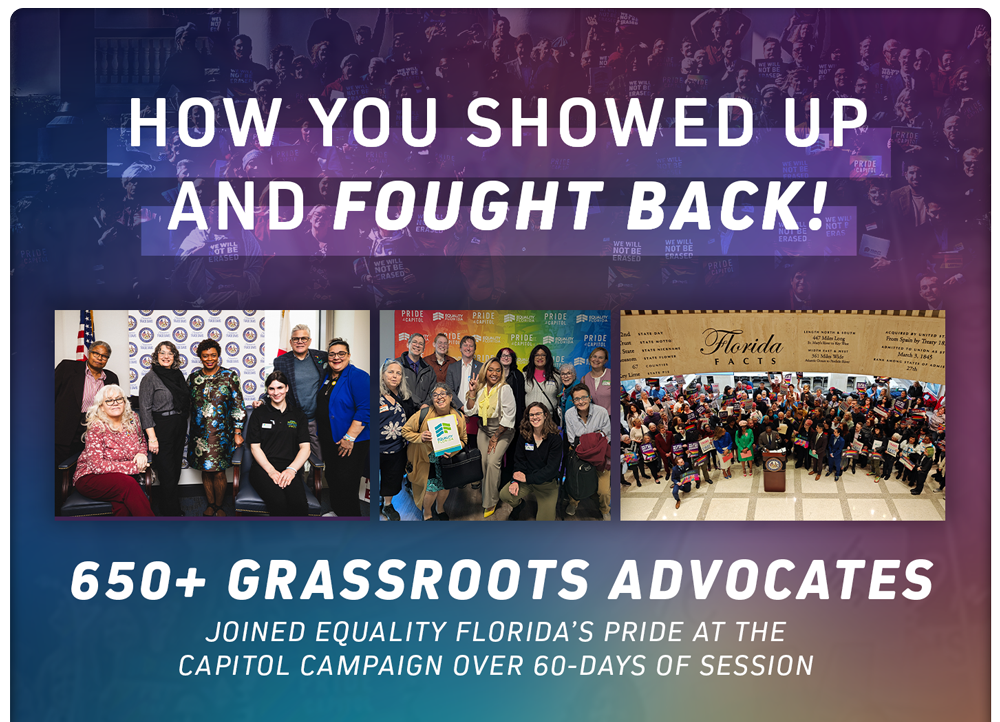
As we look back on the last 60 days, we want to highlight all the ways that YOU helped us fight back and apply the public pressure on these bad bills. For 9 weeks, you joined us in Tallahassee during our Pride at the Capitol program and your efforts made this victory possible.
Our WINNER of the week is Senator Alexis Calatayud for helping to spearhead the critical stopgap funding for Florida’s AIDS Drug Assistance Program, restoring access to HIV care for over 10,000 people. She deeply engaged with advocates and a bipartisan coalition of her colleagues in the Senate to understand and elevate this complex issue. In a week where she also took important votes opposing dangerous legislation, we appreciate her focus on this urgent priority.
Our LOSERS of the week are Senator Clay Yarborough and Representative Dean Black, sponsors of the sweeping and dangerous “Anti-Diversity in Local Government” bills. Despite overwhelming public opposition and bipartisan pushback from local leaders and fellow lawmakers, they forced this legislation through in the final days of session. During Senate debate, Yarborough could barely even acknowledge the LGBTQ community while rejecting nearly every effort to ensure our community was protected. Earlier in the process, when Representative Black was asked whether the bill could allow white supremacists to sue cities for recognizing a holiday like Yom Kippur, he shrugged it off saying, “Everyone deserves their day in court.” Empowering that kind of hate has no place in our Capitol. These bills fuel divisive culture wars and do nothing to actually help Floridians.

ADAP Update:
In the final days of session — in a unanimous, bipartisan vote — the Florida House and Senate passed emergency funding to restore access to HIV care for more than 10,000 people through the state’s AIDS Drug Assistance Program (ADAP). The funding will take effect immediately once signed into law. This is incredible news, but the fight isn’t over. This emergency funding provides only a short-term bridge. Lawmakers must still secure additional ADAP funding in the upcoming state budget to ensure people living with HIV can continue accessing the healthcare they rely on.
This victory happened because people refused to give up. For more than two months, HIV/AIDS advocates like Michael Rajner worked around the clock to sound the alarm and demand action — alongside incredible partners including AIDS Healthcare Foundation (AHF), SERO Project, providers like Big Bend Cares, and many others. We also thank the bipartisan group of lawmakers who acted quickly to secure this emergency funding, including Senate President Albritton, Senators Carlos Guillermo Smith, Shevrin Jones, Rosalind Osgood, Alexis Calatayud, Ileana Garcia, and Representatives Alex Andrade, Dana Trabulsy, and Mitch Rosenwald.
Now, we’re going to take you through exactly how we were able to claim so many victories this legislative session to protect the freedom and dignity of all Floridians.
Anti-LGBTQ Bills
Pride Flag Ban Bill (HB 347/SB 426) — STOPPED
Sponsors: Sen. Clay Yarborough and Rep. David Borrero
- What it would have done: Continuing the attacks on visibility for the LGBTQ and other marginalized communities that resulted in ripped up crosswalks and street murals over the summer, the Pride Flag Ban bill would ban any flags regarding “political ideology, race, gender, or sexual orientation” from government buildings. The terms are so broad that they ban even rainbow imagery on posters, coffee cups, and lapel pins. This is blatant censorship. By erasing symbols of inclusion from public spaces and classrooms, this bill seeks to send a message about who belongs and who does not.
- What happened: This was the fourth consecutive year this anti-LGBTQ bill has been filed. Before the 60-day session began, over 1,000 Floridians sent emails to lawmakers opposing the Pride Flag Ban before the 60-day session began — helping to prevent this bill from having a single hearing in the House or Senate this year.
Don’t Say Gay or Trans at Work (HB 641/SB 1642) — STOPPED
Sponsors: Sen. Stan McClain and Rep. Rachel Plakon
- What it would have done: This grievance legislation brings Florida’s culture wars directly into the workplace by regulating how people refer to themselves and others on the job. It would shield employees from accountability for intentionally misgendering transgender coworkers, and even prohibits job applicants from identifying as transgender or nonbinary on job applications. The bill also seeks to block LGBTQ-inclusive cultural competency training in certain workplaces, making environments less safe and less respectful. This bill would undermine dignity and basic professionalism in the workplace.
- What happened: The House version of the “Don’t Say Gay or Trans” bill was moving on a fast track through the legislature. HB 641 cleared all three of its assigned committees in the Florida House, and its Senate companion, SB 1632, advanced through its first committee stop. But our community refused to back down. Grassroots advocates showed up to committee after committee hearing, packed the rooms, sent more than 6,000 emails, and made hundreds of calls to lawmakers — making it impossible to ignore the overwhelming opposition to this dangerous legislation. Because of that relentless pressure, neither bill ever made it to the floor for a final vote. Together, we stopped this harmful proposal in its tracks.
More Lawsuits for Teachers & Doctors (HB 743/SB 1010) — STOPPED
Sponsors: Rep. Lauren Melo and Sen. Clay Yarborough
- What it would have done: These bills hand the Attorney General sweeping authority to investigate and sue school staff and health care providers under vague and undefined standards, intensifying Florida’s attacks on transgender youth and LGBTQ communities. The bills weaponize state government to intimidate and punish public servants, pile new felony penalties onto care that is already prohibited, and turn Florida’s classrooms into legal minefields. Instead of protecting children or families, these bills will reduce access to healthcare for everyone, drive providers and educators out of the state, saddle taxpayers with new costs, and erode public trust.
- What happened: In the Senate, SB 1010’s first hearing brought dozens of parents who spoke out about how the bill would harm their ability to support their children, including transgender youth. Their testimony clearly made an impact — one Republican senator raised concerns during the hearing, another invited parents to continue the conversation afterward, and the bill was never heard again. In the House, HB 743 cleared all three committees and appeared headed for a floor vote. The danger escalated when the sponsor confirmed the bill could jail teachers, mental health providers, and even parents for helping a transgender child access mental health support. But grassroots advocates kept the pressure on — packing hearings, sending more than 2,200 emails, and making hundreds of calls. In the end, HB 743 was never brought to the House floor, stopping this dangerous bill in its tracks.
Anti-Diversity In Local Government (HB 1001/SB 1134) — PASSED
Sponsors: Sen. Clay Yarborough and Rep. Dean Black
- What it would have done: Different communities have different needs, but the Anti-Diversity in Local Government bill is a state sledgehammer to stop cities and counties from any action that recognizes and responds to differences based on race, sex, ethnicity, gender identity, or sexual orientation, with limited exceptions. It would repeal any such existing programs, ban funding such programs, and threaten city and county officials with removal from office for anything vaguely labeled “diversity, equity, or inclusion.” It would effectively ban local governments from a range of actions like hosting or supporting Prides, offering LGBTQ cultural competency training, or recognizing Black History Month.
- What happened: Despite sustained bipartisan opposition from the public, local elected leaders, and lawmakers in both chambers that earned some critical carve-outs as addressed above, the bill ultimately passed the House and Senate and is expected to be signed into law. Importantly, the bill will now be sent to the Governor, and if signed into law, will not take effect until its delayed effective date of January 1, 2027.
Penalizing Local Diversity & Inclusion Spending (HB 1329/SB 1566) — NEUTRALIZED
Sponsors: Sen. Nick DiCeglie and Rep. Yvette Benarroch
- What it would have done: This bill is state overreach that fines local government for funding programs and services addressing diverse communities’ needs by differentiating based on race, color, sex, or ethnicity, as well as any programs or services advancing “social justice” or addressing implicit bias or antiracism. It extends even beyond the Anti-Diversity in Local Government bill, threatening nondiscrimination ordinances and specialized community health programs.
- What happened: Both HB 1329 and SB 1566 passed their committees of reference, and HB 1329 ultimately passed both chambers and will be sent to the Governor. However, the sweepingly broad provisions regarding diversity and inclusion spending were removed during the committee process, neutralizing the bill to only its other government transparency provisions.
Additional High Priority Bills
Book Ban Expansion (HB 1119/SB 1692) — STOPPED
Sponsors: Rep. Doug Bankson and Sen. Stan McClain
- What it would have done: This bill would supercharge book banning and censorship in Florida’s K-12 schools by discarding a long-standing constitutional standard to make it easier to challenge and remove educational materials. Florida already leads the nation in book bans. This bill doubles down on authoritarian practices like censorship and disproportionately targets books about LGBTQ+ people, race, and history. Denying students access to books doesn’t protect them; it leaves them less informed, less prepared, and less able to think critically.
- What happened: Although HB 1119 passed the full House of Representatives on February 11 by a vote of 84-28, the bill never received a committee hearing in the Senate and was not considered further.
Police State Bills (HB 1471/SB 1632) — PASSED
Sponsors: Rep. Hillary Cassel and Sen. Erin Grall
- What it would have done: This legislation is an outrageous escalation of state terror for disagreeing with the government. It creates a vague, new designation of “domestic terrorist organization” for organizations engaging in allegedly dangerous activities intended to “coerce” the public or influence government policy “by intimidation or coercion.” Felony penalties apply for donating to, advising, or volunteering with an organization that one knows is a domestic terrorist organization or engages in such activity would constitute a felony, and for becoming a member of such organization with intent to further its allegedly illegal activity.
- What happened: Despite sustained bipartisan opposition including several Republican Senators, the bill passed both chambers. The bill was amended several times, but the underlying harms remain. It will be sent to the Governor, and if signed into law, will be effective July 1, 2026.
New Barriers to Voting (HB 991/SB 1334) — PASSED
Sponsors: Rep. Jenna Persons-Mulicka, Rep. Dana Trabulsy, and Sen. Erin Grall
- What it would have done: The onerous new proof of citizenship requirements for voter registration and verification in the New Barriers to Voting bills are rooted in a false narrative about voter fraud and introduce an expensive and burdensome new requirement that will lead to more eligible voters being disenfranchised. These pose particular risk for voters who have changed their names for marriage or other reasons, whose legal name no longer matches proof of citizenship documents like a birth certificate, or don’t have a Florida driver’s license or state ID.
- What happened: Despite sustained bipartisan opposition and fierce debate from a number of Democrats, the bill passed both chambers. An amendment by Senator Jones that would have allowed for student and senior center IDs to be used for voting garnered bipartisan support but ultimately was not adopted. The bill will be sent to the Governor, and if signed into law, will be effective July 1, 2026.
Endangering Our Kids Act (HB 173/SB 166) — STOPPED
Sponsors: Rep. Kim Kendall and Sen. Erin Grall
- What it would have done: This bill would put young people at risk by restricting minors’ access to birth control, STI treatment, and other essential healthcare without parental consent. In the real world, not all young people can safely involve a parent in sensitive health decisions. Public health policy should empower youth to take responsibility for their wellbeing, not punish them for seeking care when they are vulnerable or afraid. This bill prioritizes control over safety and will lead to worse health outcomes for young Floridians.
- What happened: HB 173 passed through its three assigned committees of reference in the House of Representatives, but was never scheduled for a final vote on the House Floor. SB 166 never received a committee hearing in the Senate and was not considered further.
Abuser’s Bill of Rights (HB 289/SB 164) — STOPPED
Sponsors: Rep. Sam Greco and Sen. Erin Grall
- What it would have done: This bill is a dangerous anti-abortion measure that would give abusers a new legal weapon by allowing them to sue people who have accessed abortion care. For survivors of domestic violence, this opens the door to intimidation, retaliation, and continued control long after abuse has occurred. The bill claims to fix a problem that doesn’t exist, as Florida law already allows lawsuits for negligence and malpractice leading to pregnancy loss. The true purpose of this bill is to scare people out of accessing reproductive healthcare, no matter the cost to survivors’ safety.
- What happened: Although HB 289 passed the full House of Representatives on January 15 by a vote of 76-34, including bipartisan objection, the bill never received a committee hearing in the Senate and was not considered further.
Lowering the Gun Purchase Age (HB 133) — STOPPED
Sponsors: Rep. Tyler Sirois
- What it would have done: Florida raised the minimum age to purchase firearms to 21 after the 2018 Parkland tragedy, as part of the Marjory Stoneman Douglas Firearms Safety Act. The Lowering the Purchasing Age bill rolls back that promise, allowing 18-year-olds to buy and carry guns. Weakening this life-saving law dishonors the victims of Parkland and ignores the clear link between access to firearms and gun safety. Floridians were promised safer communities, but this bill moves us backward.
- What happened: Although HB 133 passed the full House of Representatives on January 15 by a vote of 74-37, the bill was never filed in the Senate and never received further consideration in the Upper Chamber.
Education Package (HB 1071/SB 1090) — STOPPED
Sponsors: Rep. Dana Trabulsy and Sen. Erin Grall
- What it would have done: The Education Package contains several concerning provisions, including a ban school districts using state or federal funding for “social and political activism” activities by students and a revision to sexual health education content, which could introduce biased and anti-abortion information about fetal development. The House version of the bill also includes a provision facilitating law enforcement presence on school campuses, which can contribute to fear and intimidation of desperately needed school teachers and students who should be able to focus, work hard, and succeed. The Senate version would make Florida’s already limited sexual health education opt-in only, creating a new hurdle to important information.
- What happened: HB 1071 ultimately passed the full House of Representatives by a vote of 82-31, but not before Rep. Trabulsy removed the law enforcement expansion provision in response to public input. The bill failed to garner a hearing in the Senate, however, and did not pass the legislature.
This session, we proved beyond a doubt that our voices matter, our actions matter, and our movement matters.
And while we celebrate, we also know the work is far from over. This session still delivered real harm to democracy and equity — and we’re just as committed to undoing that damage and building a Florida that truly belongs to all of us. Together, we will continue to fight back, resist, and turn the tide.